.svg)


When Manufacturing Comes Home: Managing Risk and Resilience Through Onshoring
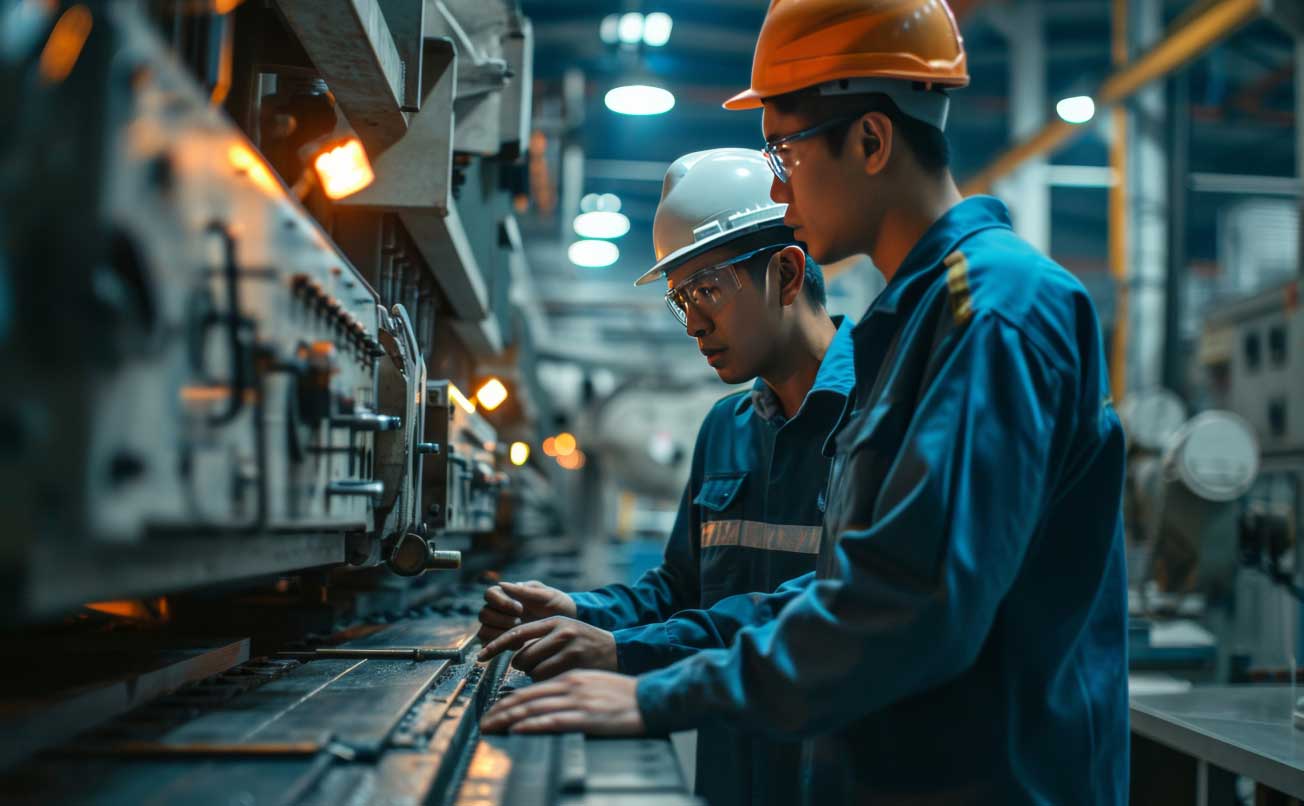
Manufacturing and engineering companies are unique in that the services they pay for relate directly to a physical product. This network of processes, suppliers, and operations, the supply chain, forms the backbone of every product, whether in telecoms, FMCG, automotive, aerospace etc.
It was popular for companies to often outsource production to gain cost advantages, allowing them to consolidate own expertise into centres of excellence, or enable growth. In practice, this usually means relying on an extended network of suppliers, sometimes overseas. Yet increasingly, businesses are re-examining the balance of control in their supply chains. Whether through onshoring, nearshoring, or “friend-shoring” locating production closer to home or politically aligned partner. There is a clear trend toward bringing manufacturing closer to the point of control, improving agility and reducing risk.
Challenge the Curve: Risk, Readiness, and Resilience
Recently the world has faced a consecutive issue that have directly impacted industry. Where “known” problems can be mitigated there is no better substitute for mitigating “unknowns” than getting better control over your supply chain and that control means proximity to point of manufacture.
The PESTLE model (Political, Economical, Social Technological, Legal and Environmental) comes heavily into play with motives of onshoring now occurring on multiple, overlapping levels. It has never been more apparent in manufacturing that surrendering control for the margin of overheads is not economical when cost of logistics, trade tariffs and unpredictable acts of god come into play. Not forgetting the power of a brand has when quality is at the heart within the prestige of heritage, bringing manufacturing to your shores can show your companies ambition beyond profit.
Minimising Disruption and Managing Knowledge
A disciplined programme ensures transitions are smooth. Knowledge is captured and transferred efficiently, production processes are validated before full-scale deployment, and contingency plans are in place for unforeseen issues.
The goal is to maintain operational continuity for both the outgoing and receiving suppliers while embedding new capabilities for the long term. Lessons learned can inform future relocation or industrialisation initiatives, creating repeatable best practices.
Reshoring in Action: Real-World Examples
Britten-Norman – Aerospace on the Isle of Wight
A UK aerospace company based in Isle of Wight, Britten-Norman, returned production to the UK in 2023 after 60 years of production overseas. This production will lead two models with their own assembly line in the Isle of Wight. With rising overheads in Romania, this allowed the possibility to bring back manufacturing to the UK with innovation and high standards in British aerospace quality.
Bianchi – Italian Bicycle Manufacturing
Italian bicycle manufacturer Bianchi has manufactured bikes in Asia for a significant period. Over the past 3 years, they have begun developing capability back into Italy in manufacturing and assembly. This has signified appetite to have more control in the face of trade prices and proximity of manufacture to delivery. Several other major and minor brands are following suit, such as Colnago and Sarto, to have the ambition of Made in Italy. This leads to the opportunity for a balanced approach for location in mitigating revenue fluctuations, as the bicycle has endured in the past 3 years post-pandemic.
Makita / Flambeau Europe – UK Injection Moulding
In a similar case but different approach, a UK injection moulding product for an electronics company, Makita, transferred its manufacturing from mid-Europe and Asia to the UK. This was possible through increased investment at a UK facility, enabled by the reduced lead times and logistic risk in the supply chain.
The Challenge: Two-Sided Complexity
At the heart of any onshoring programme lies a dual challenge:
- Knowledge Transfer from the Incumbent Supplier – capturing processes, tacit know-how, and engineering practices.
- Successful Launch of the Receiving Facility – establishing capability, quality, and operational readiness without disrupting ongoing production.
These are not trivial tasks. Defining success at the inception of the programme is critical. Clear requirements, KPIs, and acceptance criteria allow teams to measure progress, manage risk, and avoid costly surprises.
Risk and Due Diligence: The Foundation of Success
Before moving production, a measuring the risk of transfer is essential:
- What supply disruptions impact product availability and revenue?
- Can the receiving site meet quality, delivery, and regulatory standards?
- Are there logistical, environmental, or political factors that could interfere with continuity?
Due diligence must cover both the incumbent supplier and the receiving facility, assessing:
- Equipment, engineering resources, and maintenance capability
- Material availability and supply chain robustness
- Processes for stock management, logistics, and quality control
- Industrialisation readiness, including training and documentation
By taking this holistic view, its possible to identify what potential failure points, allocate resources appropriately, and scope the project realistically.
Industrialisation Engineering: Turning Plans into Reality
Once risk and capability are understood, industrialisation engineering ensures the relocated process becomes repeatable, reliable, and scalable. Key activities include:
- Mapping workflows and verifying production capacity with equipment capability
- Developing standard operating procedures and work instructions
- Establishing production qualification metrics and validation checkpoints
- Training operators and engineers to ensure continuity and consistency
- Integrating the new facility into the broader supply chain
This structured approach ensures the facility can operate without disruption, delivering the same quality, throughput, and reliability as the incumbent site.
Benefits of a Well-Managed Onshoring Programme
When executed effectively, a structured onshoring programme delivers:
- Rationalisation – streamlined operations and supplier networks
- Value Chain Improvement – reduced waste, improved quality, and increased responsiveness
- Proximity to Point of Manufacture – faster response, tighter control, and reduced logistics risk
Ultimately, onshoring is not just about geography. It is about programme discipline, risk management, and industrialisation engineering. A structured approach enables operational continuity, builds local capability, and improves resilience without leaving outcomes to chance.
Getting Started
Every onshoring initiative begins with clarity of purpose, risk assessment, and scope definition. Leadership workshops help define objectives, prioritise risks, and outline requirements. From there, programme managers can map knowledge transfer, define industrialisation steps, and create a robust plan to manage every foreseeable risk.
With this approach, onshoring becomes a carefully managed programme that balances risk, capability, and operational continuity. Turning what could be a high-risk relocation into a controlled, repeatable, and resilient operation.
 Back to news articles


